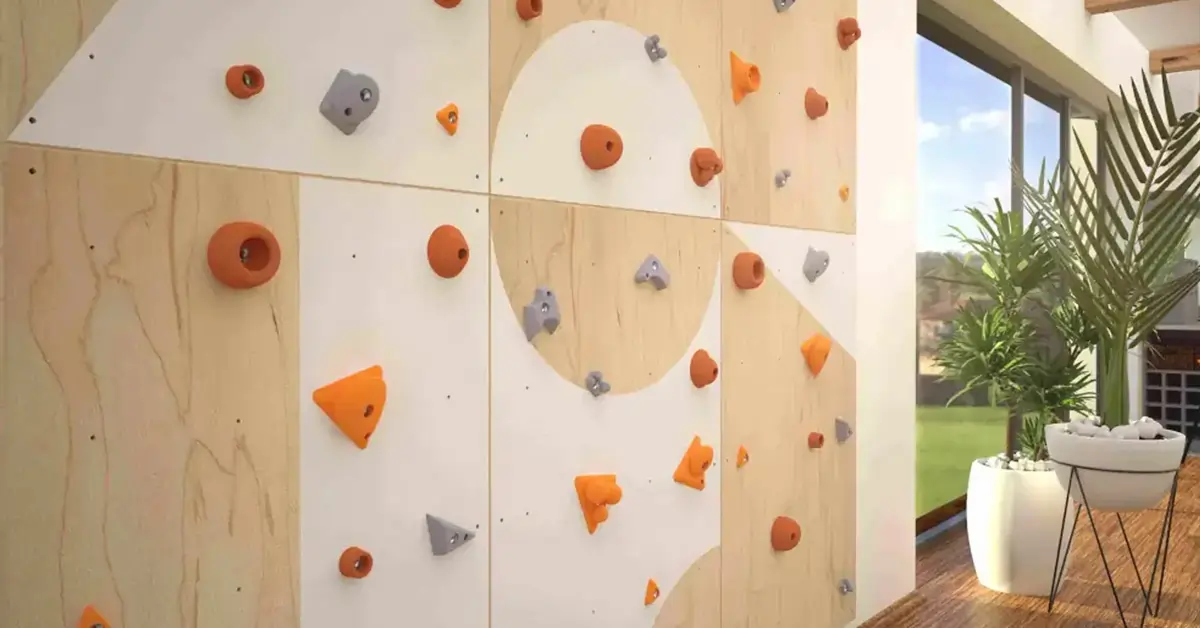
Both options can work beautifully. The right choice depends mainly on your available space, lifestyle and how your family prefers to spend time together.
After years of designing and building children’s climbing walls, speaking with parents across Europe and seeing real installations in homes, schools and gardens, we know there is no universal answer. Indoor and outdoor climbing walls each offer different advantages.
This guide will help you decide which solution fits your home best.
Before diving into specifications, it helps to compare the two formats at a glance.
| Factor | Indoor Wall | Outdoor Wall |
|---|---|---|
| Availability | Year-round, any weather | Weather-dependent |
| Typical size | Compact, 2–6 m² | Larger, often 4–15 m² |
| Setup cost | Lower (no foundations) | Higher (anchors, footings) |
| Maintenance | Minimal | Periodic (UV, moisture) |
| Best for | Apartments, daily play | Houses with garden, active play |
The rest of this article walks through the practical detail behind each row.
An indoor climbing wall gives children access to movement every day of the year — regardless of weather, season or daylight.
Rain outside? Dark winter afternoon? Too much energy before bedtime? An indoor wall is always ready.
For many families, an indoor climbing wall for the home becomes part playground, part gym and part creative space.
If your priority is fresh air, larger climbing structures and active outdoor play, an outdoor wall is usually the better choice.
Children who truly love climbing often outgrow smaller indoor setups surprisingly quickly.
A garden climbing wall can become the centrepiece of an active outdoor playground.
Outdoor climbing walls require more attention because they must handle rain, frost, UV radiation and temperature changes.
That is why material quality matters much more outdoors.
Using low-quality materials outdoors may lead to warping, cracking or delamination after only a few seasons.
Regular maintenance is simple but important:
High-quality materials significantly extend the lifespan of the wall and improve safety.
Safety should always come first — especially with children’s climbing equipment.
Indoor and outdoor climbing walls differ mainly in two areas:
Indoor installation
Indoor climbing walls are usually anchored directly into solid masonry or structural walls. Proper anchoring is essential because climbing creates strong leverage forces.
Drywall installations require specialised mounting systems and professional assessment.
Outdoor installation
Outdoor walls are often:
If mounted onto insulated façades, specialised chemical anchors and extended fasteners are usually necessary.
Indoor impact protection
Indoor climbing walls should always include certified impact protection such as:
Regular pillows or mattresses are not designed to absorb climbing falls safely.
Outdoor landing surfaces
For lower climbing heights, grass may sometimes be acceptable, but better solutions include:
Professional impact surfaces improve shock absorption, reduce maintenance and stay more durable over time.
Small apartment
Modular climbing panels are usually the best solution. Compact systems can fit into surprisingly small spaces and still provide excellent movement opportunities. Browse our individual indoor climbing panels for flexible setups.
Children’s room with higher ceilings
This setup allows combinations with:
Small garden
An A-frame climbing structure works well in limited outdoor spaces and can combine climbing with nets or ladders.
Large garden
A larger climbing tower with slides, platforms and multiple climbing routes creates a complete outdoor play area. Try our outdoor configurator to see how individual modules fit together.
One of the most common mistakes parents make is choosing the cheapest climbing holds available online.
High-quality climbing holds:
Professional climbing-grade materials make a noticeable difference in comfort, durability and confidence while climbing. If you’re unsure which type is right for your child’s age, our team is happy to advise.
There is no single right answer to the indoor-vs-outdoor question — and that’s the point.
The best setup is the one your family will actually use every day. If your weekdays are packed and weekends booked, an indoor wall delivers reliable daily movement. If your children already gravitate towards the garden, an outdoor wall lets them push further and combine climbing with the rest of their outdoor play.
Plenty of families end up with both — and use modular systems to expand step by step. Browse our full range of indoor and outdoor kids climbing walls or check the certifications and technical documents before you buy.
How can I recognise high-quality climbing holds?
Look for polyurethane or polyester resin with a textured, non-slip surface. Good climbing holds feel solid in the hand, have rounded edges, and resist UV fading. Cheap plastic holds are often slippery, lightweight, and may crack over time.
Does an outdoor climbing wall need to be stored during winter?
No — a properly built outdoor wall using weather-resistant materials can stay outside year-round. Some families remove the climbing holds during the harshest winter months to extend their lifespan even further, but the wall itself is built to handle frost, rain and UV.
What is a modular climbing wall system?
A modular system uses individual climbing panels that can be expanded, rearranged or upgraded over time. This means you can start small, then add panels, change route difficulty or move the wall to a different room as children grow.
What if I need a custom wall size?
Most reputable manufacturers offer custom solutions. Modular panels can often be adjusted to fit unusual spaces such as loft rooms, sloped ceilings, corners or narrow hallways. Send your dimensions and we’ll suggest a configuration that fits.
Which option is safer — indoor or outdoor?
Both can be equally safe when installed correctly and paired with proper impact protection. The deciding factors are not indoor vs outdoor, but correct anchoring, certified landing surfaces and regular inspections — apply those consistently and either setup is safe for daily use.
Can I have both an indoor and an outdoor climbing wall?
Yes, and many active families do exactly that. A small indoor panel covers rainy days and quick bursts of energy before bedtime, while a larger outdoor structure handles weekend play. Using the same modular system for both keeps holds and accessories interchangeable.

Czech manufacturer of children's climbing walls, holds, and crash pads. We design and manufacture indoor climbing walls in the Czech Republic, meeting EN 1176/1177 safety standards and helping children develop motor skills, strength, and confidence — at home on a children's climbing wall, in the garden, and in kindergartens and schools. We also supply climbing holds for kids and safe crash pads for our walls. We write about what we know from experience: safe climbing for children from wall design to installation.
Design your own climbing wall exactly according to your family’s space, taste, and needs.
Get the kids involved and design a wall together according to your preferences — colors, shapes, and dimensions. Fun designing, beautiful and functional results.

Write to us – we will be happy to recommend a suitable solution and answer your questions.


