Climbing Wall for Toddlers Aged 1–3: A Safe Start

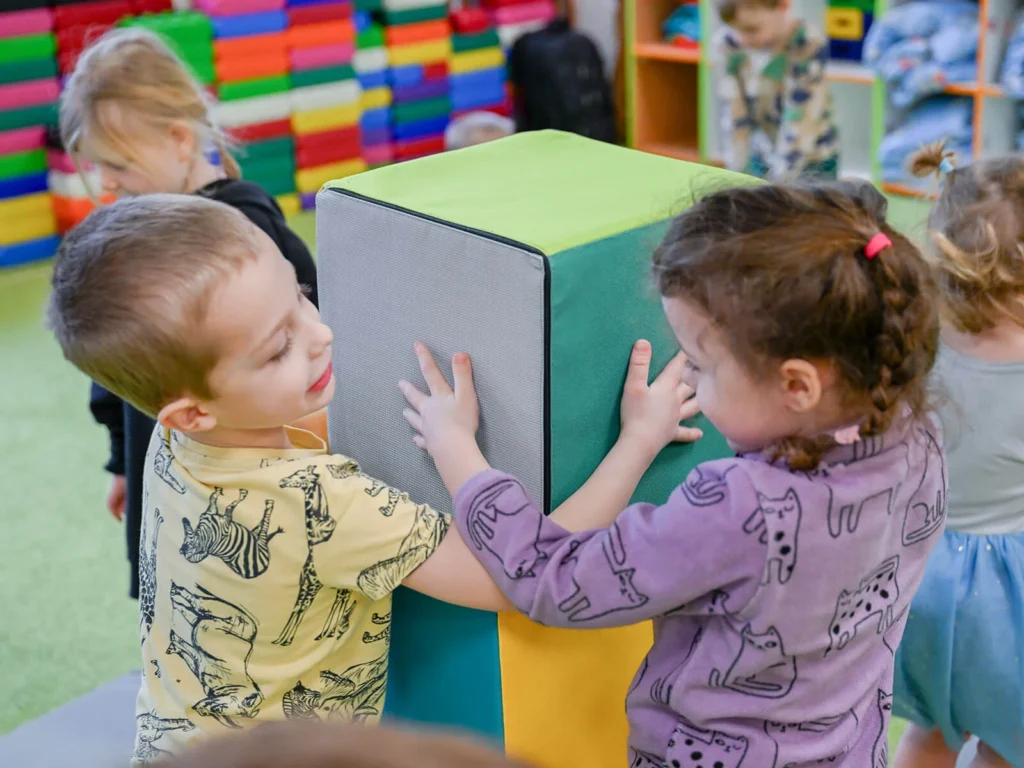
Ilustrační obrázek k článku o lezení s dětmi od1 do 3 let

For children aged one to three, we cannot yet talk about real sport climbing. Even so, this is an ideal age to encourage children to discover what their bodies can do and naturally develop their motor skills. Movement on an inclined surface or a low climbing wall strengthens the deep stabilising muscles, improves hand-eye coordination and builds healthy self-confidence.

If your toddler has an older sibling who is crazy about climbing, they will naturally want to imitate them. Let your child try the same movements, but always stay close – toddlers cannot yet assess risks and often try to catch up with their role models much faster than their physical abilities allow.

So how can you make your little explorer’s first experience with climbing safe, fun and appropriate for their age?

Height, Holds and Angle – Simple Rules

When creating a climbing area for a toddler, forget about height and complicated routes. The key is natural movement and playfulness.

  1. Minimum height: For children aged 1 to 3, a wall height of 120–150 cm is more than sufficient. The child should always be able to climb down safely or step/jump onto the mat.
  2. Vertical or inclined wall: BLOCKids walls are usually installed vertically against a wall. However, if you have a carpenter or a capable DIY enthusiast at home, you can create a gently inclined wall and anchor it, for example, to a bed frame or the side structure of a bunk bed. The incline will make climbing easier for a young child.
  3. Ergonomic handholds and footholds: Forget small edges. Use rounded holds, jugs and sufficiently large footholds. Specially designed climbing holds for children fit small hands perfectly and do not press uncomfortably into the palms.

Search note: In practice and online, you will often come across the term “climbing rocks for kids”. This is an informal name that an experienced climber would not use, because the correct terms are climbing holds and footholds. Nevertheless, when looking for inspiration online, this search term can help you discover various creative sets.

Children’s climbing walls are now becoming a common feature in kindergartens and childcare groups, where they help children naturally develop gross motor skills. A modular climbing wall at home brings the same benefits directly into the child’s bedroom.

Landing and Supervision (Practical, Not Theoretical)

Toddler safety does not depend on complicated equipment, but on the constant presence of a parent and a soft landing area.
  • Landing area: There should never be a bare floor or hard carpet beneath the wall. The ideal choice is a certified impact mat that absorbs the force of a fall. A high-quality, sufficiently thick gym mat can also be suitable.
  • Active supervision: For children under 3, follow the “within arm’s reach” rule. This is especially important if a toddler is copying an older sibling – a young child will try the same moves without the same sense of danger. Let your child explore movement independently, but always be ready to catch them.
  • Using a harness as a swing: Some parents use a full-body harness clipped with a carabiner to a hanging rope to create an improvised swing. For very young children, this can be a fun way to become comfortable with being off the ground, but at this age the priority should always remain free movement close to the ground.

More Than Just a Wall: Create an Indoor Adventure Course

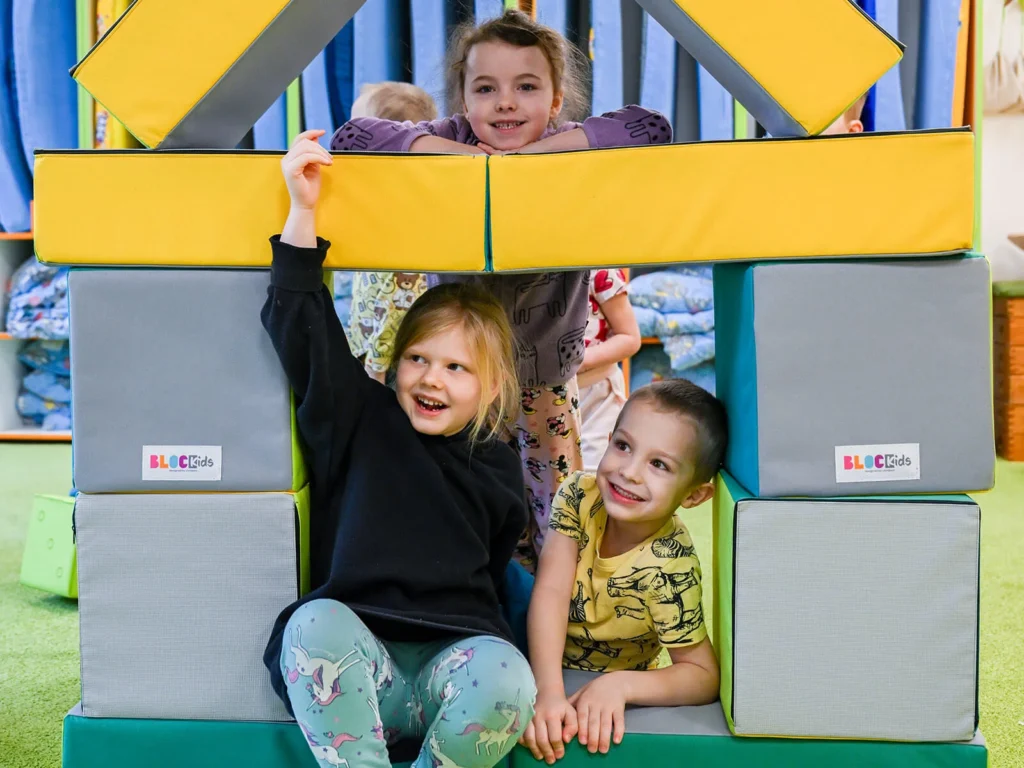
Domeček z kostek
Domeček z kostek

A climbing wall does not have to stand alone in the child’s room. For toddlers, it is great to combine it with other elements that develop coordination and balance:

  • Balance bridge: Children can practise balance and ankle stability on it before taking their first steps on the climbing wall itself.
  • SoftBLOCKS: Soft foam cubes and blocks work well as safe steps for reaching the wall, but also as building materials for playhouses or for creating an indoor obstacle course.
  • Blackboard for drawing: Replace one climbing panel with a drawing board and support your child’s fine motor skills as well. Give them freedom to create. You can also draw a path on the board for the child to trace with their own chalk.

5 Climbing Games (To Keep It Fun)

Drilling a toddler through individual moves will not motivate them to be active. Everything should happen through play:

  1. Rescue the teddy: Place a favourite toy on a higher climbing hold. The child’s task is to climb onto a foam cube and reach it with their hand. Older children can climb up to rescue it.
  2. Colour challenges: If your wall has climbing holds in different colours, teach children to recognise colours by giving simple instructions: “Touch the red hold with your hand!” or “Stand on the yellow cube.”
  3. Obstacle course with SoftBLOCKS: Build an access route to the climbing wall from foam SoftBLOCKS. From there, the child crosses the balance bridge directly to a hold on the wall, where a reward is already waiting – a balloon, a sweet, a small toy…
  4. Animal climber: Pretend to be monkeys or lizards. Children enjoy imitating animal movements, and it naturally engages the whole body.
  5. For three-year-olds: Try traversing with your child – climbing from right to left close to the ground without touching the mat.

Climbing holds by Makak or Therex in the shape of animals, trains or cars not only delight children but also provide suitable stimulation for muscles and tactile development.

What to Watch Out For

  • Do not push too hard: If your child is having an off day or is afraid of heights, never force them to climb. Leave the wall freely accessible; when your child is ready, they will want to explore it on their own.
  • Do not build from uncertified materials: A homemade wall built without knowledge of wall load capacity or plywood quality can lead to injury. Read our article DIY Home Climbing Wall vs. a Ready-Made System to learn about the risks of untested DIY constructions or second-hand products.
  • Keep obstacles away from the wall: There should be no hard toys or other objects around the landing area. Also remove any furniture with sharp edges from within reach.
  • Wrong footwear: Toddlers should climb either barefoot (for better stimulation of the soles of the feet) or in soft indoor shoes. Hard soles reduce sensitivity in the feet.

Frequently Asked Questions (FAQ)

1. At what age can a child start climbing on a climbing wall?

As soon as a child can walk steadily and shows an interest in climbing on furniture (usually around 12–18 months), they are ready for their first steps on a safe climbing wall.

2. Are traditional climbing shoes suitable for toddlers?

No. Traditional climbing shoes are not suitable for toddlers under 3 because their feet are still developing and need unrestricted movement. The best option is climbing barefoot or in non-slip socks.

3. How do I choose the right climbing holds for young children?

Choose holds specifically designed for children – they should have rounded edges, a pleasant surface and a shape suitable for a small hand. Even smaller holds that adults might find difficult to grip can provide children with enough space for a comfortable hold. Experiment with the orientation of the holds as well.

4. Is climbing also suitable for children with delayed motor development?

Yes, climbing can be an excellent therapeutic activity. However, it is always advisable to discuss specific exercises with a physiotherapist or paediatrician.

5. How high should a climbing wall be for a two-year-old?

For a two-year-old, a climbing wall height of up to 120 cm is more than sufficient. For more movement, traversing (climbing sideways) on panels installed next to each other close to the floor is a good option.

6. How many climbing holds does a toddler need per panel?

For young children, a higher density of holds is recommended (around 8–10 holds per m²), so they always have enough options within easy reach for both hands and feet.

Need Help Choosing a Climbing Wall for Your Toddler?

Write to us using our contact form or give us a call. We will be happy to discuss everything with you.

Picture of BLOCKids

BLOCKids

Czech manufacturer of children's climbing walls, holds, and crash pads. We design and manufacture indoor climbing walls in the Czech Republic, meeting EN 1176/1177 safety standards and helping children develop motor skills, strength, and confidence — at home on a children's climbing wall, in the garden, and in kindergartens and schools. We also supply climbing holds for kids and safe crash pads for our walls. We write about what we know from experience: safe climbing for children from wall design to installation.

Design your own climbing wall exactly according to your family’s space, taste, and needs.

Get the kids involved and design a wall together according to your preferences — colors, shapes, and dimensions. Fun designing, beautiful and functional results.

Share:

Need help with your selection?

Write to us – we will be happy to recommend a suitable solution and answer your questions.