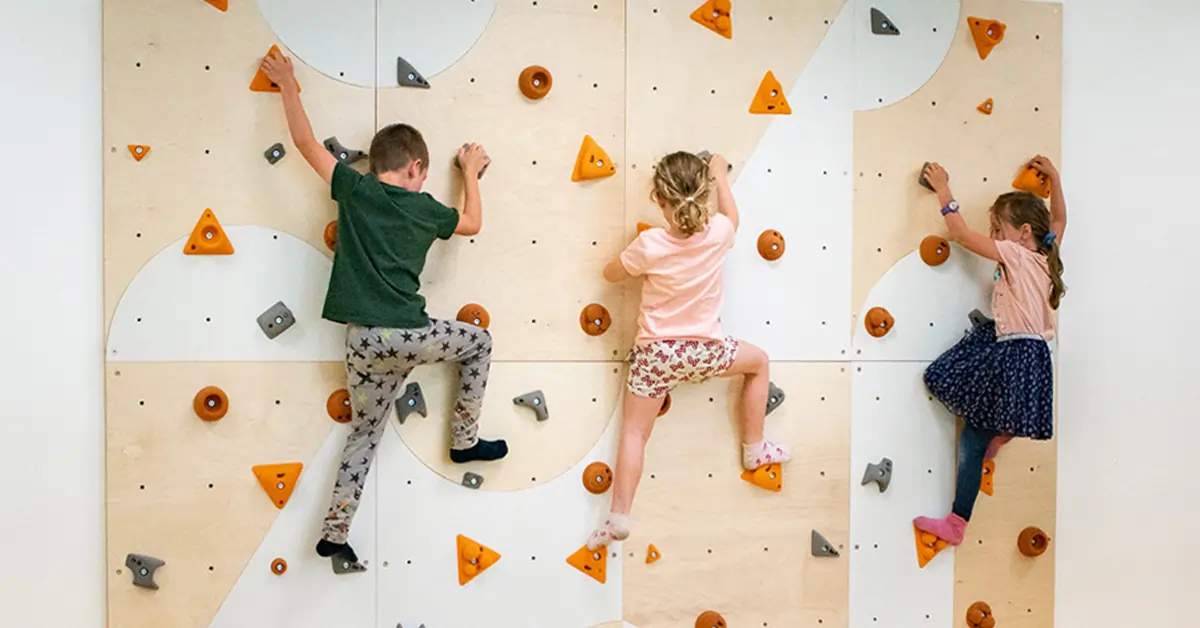
Climbing comes naturally to children. Even toddlers instinctively try to reach higher places and explore the world from a different perspective. It may look like simple movement, but it plays an important role in healthy physical development and helps children build essential motor skills.
If you are wondering whether to encourage your child to climb on playgrounds, trees or a climbing wall, keep reading. Here are three important reasons why climbing benefits not only the body, but also the mind.
Many parents worry that climbing is dangerous, but studies show the opposite can often be true. Research comparing climbing activities with common exercises in school PE classes found climbing to have a relatively low injury rate when performed in an appropriate environment.
Climbing is a full-body activity. As children climb, they naturally alternate between their hands and feet, engaging their core, shoulders, back, arms and legs all at once. It activates muscle groups that are often underused in everyday activities such as walking or running.
Benefits of regular climbing include:
A climbing activity encourages children to move dynamically while strengthening the body in a natural and playful way.
Climbing is one of the best activities for developing gross motor skills. Children constantly search for the next handhold or foothold, which improves spatial awareness and distance estimation.
While climbing, children learn to:
Even small climbing holds help train fine motor skills that later support activities such as writing or drawing.
A home Kids Climbing Wall creates a safe and controlled environment where children can practise these movements every day.
Climbing is not only physical — it is also mental training. Children must think ahead, plan movements and stay focused on the next step.
Every climbing route becomes a small puzzle to solve.
Children learn to:
Reaching the top — whether it is the sofa, a tree or the final hold on a climbing wall — gives children a strong sense of achievement. These positive experiences help build confidence and resilience that carry over into everyday life.
Playgrounds and nature are great places to climb, but a professionally designed climbing wall offers a controlled and safer environment for everyday play.
A well-designed indoor climbing wall:
Certified impact mats, proper installation and age-appropriate wall height all contribute to safer climbing experiences. The BLOCKids impact mats, for example, are designed specifically for children’s indoor climbing walls and comply with European playground safety standards.
The most important thing is simple: children should enjoy climbing.
Support their natural instinct to move, explore and test their abilities. Try to be more of an observer and supporter than a coach. Joyful movement is what truly helps children develop healthy bodies, confidence and a positive relationship with sport and physical activity.
Because when climbing feels like play, children naturally want to keep moving.

Czech manufacturer of children's climbing walls, holds, and crash pads. We design and manufacture indoor climbing walls in the Czech Republic, meeting EN 1176/1177 safety standards and helping children develop motor skills, strength, and confidence — at home on a children's climbing wall, in the garden, and in kindergartens and schools. We also supply climbing holds for kids and safe crash pads for our walls. We write about what we know from experience: safe climbing for children from wall design to installation.
Design your own climbing wall exactly according to your family’s space, taste, and needs.
Get the kids involved and design a wall together according to your preferences — colors, shapes, and dimensions. Fun designing, beautiful and functional results.

Write to us – we will be happy to recommend a suitable solution and answer your questions.


